
Romanian tech tree for World of Tanks proposal
- 6/6 HP
- 23/33 mm
- 12 mm
- 55 hp
- 65 hp
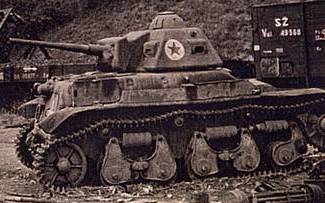


The Romanians signed a contract for 36 AH-IV-R, as they were designated by ČKD, on 14 August 1936, including one prototype to be delivered in two months and the entire order in seven months. These deadlines were unable to be met as the Romanians demanded many changes, which all had to be made on the production line because ČKD had initiated production of the entire order before the prototype was accepted. The first ten tankettes off the production line were sent to Romania in October 1937 to participate in the autumn maneuvers when they made a favorable impression before being returned to the factory. The production run was completed the next month, but the Romanians refused to accept them as they didn't conform to the specifications. The required modifications took until April 1938 to perform, but another evaluation was required under summer conditions and they weren't formally accepted until August 1938. Nicolae Malaxa bought a license to produce the R-1 as the AH-IV-R was known in Romanian service, in September 1938, but irregularities and disputes over payment delayed the transfer of the production drawings until October 1939. His factory built one prototype, mostly from R-1 spare parts, but never began production.
The R-1s were assigned to the cavalry brigades, two platoons of two or three tankettes apiece. All eighteen belonging to the Cavalry Corps were grouped into the ad-hoc "Korne Mechanized Detachment" during the opening stages of Operation Barbarossa, but all were out of commission by 1 October. Twenty-nine of the original thirty-five were allocated to the six cavalry divisions (redesignated from brigades on 25 March 1942) that successfully participated in the German 1942 summer offensive, codenamed Case Blue. The four R-1s belonging to the 1st Cavalry Division's 1st Mechanized Squadron had to be set on fire as no fuel was available for them when the division was encircled outside of Stalingrad in November 1942 as part of the Soviet Operation Uranus counter-offensive. The 5th and 8th Cavalry Divisions had lost at least five R-1s during the same time trying to solidify the crumbling Axis defenses after the Soviet breakthroughs. Both divisions supported the Germans as they attempted to relieve the Stalingrad Pocket in Operation Winter Storm, but were shattered when the Soviets counter-attacked the unsuccessful relief effort in late December 1942. Two other cavalry divisions remained in the Kuban bridgehead after the German withdrawal from the Caucasus, but their two remaining serviceable R-1s were withdrawn back to Romania during the spring of 1943 as obsolete. On 30 August 1943 only thirteen R-1s were available, all assigned to the Cavalry Training Center, although this increased by one on inventories dated 25 March and 19 July 1944. Nothing is known of any action involving R-1s during 1944, but eleven reinforced the 2nd Armored Regiment in Czechoslovakia when it reached the front on 26 March 1945. By 24 April the regiment only had one R-1 available, but none were reported as available after that date.
- 47/47/62 HP
- 51/84/23 mm
- 47/47/62 HP
- 65/95/23 mm
- 47/47/62 HP
- 51/84/23 mm
- 47/47/62 HP
- 65/95/23 mm
- 47/47/62 HP
- 65/95/23 mm
- 47/47/62 HP
- 65/95/23 mm
- 55 hp
- 55 hp
- 55 hp
- 47/47/62 HP
- 65/95/23 mm
- 47/47/62 HP
- 65/95/23 mm
- 47/47/62 HP
- 65/95/23 mm
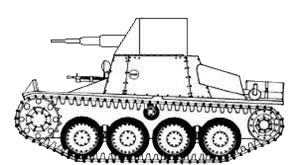
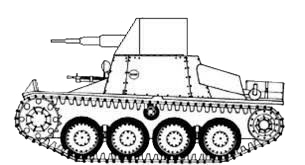
A small tank destroyer for use by Romania during World War II. It was designed on the 22nd of November 1943 at the request of the Romanian General Staff. Fourteen AH-IV tankettes were to be rearmed with soviet 45 mm AT guns. Although this vehicle was designed to be used only for security duties, the project was cancelled because it was eventually regarded as a waste of badly needed resources.

- 110/110/156 HP
- 78/120/38 mm
- 110/110/175 HP
- 125/170/38 mm
- 110/110/175 HP
- 125/170/38 mm
- 110/110/156 HP
- 78/120/38 mm
- 110/110/156 HP
- 78/120/38 mm
- 110/110/156 HP
- 78/120/38 mm
- 125 hp
- 125 hp
- 125 hp
- 110/110/156 HP
- 78/120/38 mm
- 110/110/156 HP
- 78/120/38 mm
- 110/110/156 HP
- 78/120/38 mm
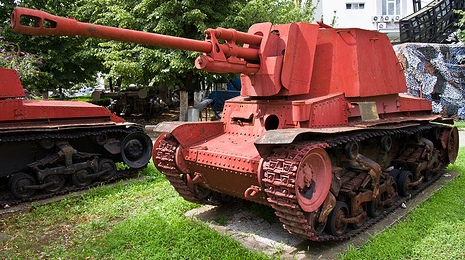
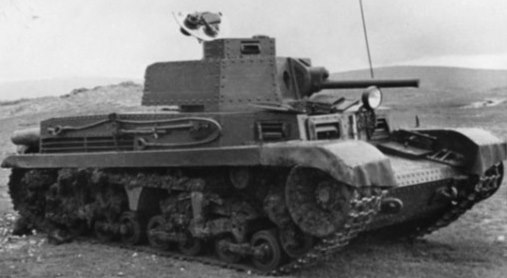
By December 1942 it was blatantly obvious that Romania's R-2 light tanks were no longer capable of standing up to Soviet medium tanks, but something had to be done to extend their service. It was decided to convert them to tank destroyers on the model of the German Marder II and Romania's own TACAM T-60, still in development. The turret was removed from one R-2 to serve as the prototype over the summer of 1943 to test the concept. A captured Soviet 76.2 millimetres (3.00 in) M-1936 F-22 field gun was removed from its carriage and a new mount was fabricated to fit the gun to the turretless R-2. A fighting compartment was built using armor salvaged from captured Soviet tanks. New Romanian and German gun sights were fitted to suit the new Romanian ammunition. Testing in late 1943 proved that the gun didn't overpower the chassis, but the gun was only effective against T-34s up to ranges of 500–600 metres (550–660 yd). Forty were planned to be converted by Leonida in Bucharest, but the process couldn't begin immediately because Germany hadn't yet delivered the tanks that were to replace the R-2 which allowed the F-22 gun to be exchanged for the more powerful ZiS-3 gun on the production models.
Leonida began work in late February 1944, and the first batch of twenty conversions was complete by the end of June. Production was halted then because the gun was thought inadequate to face the new heavily armored IS-2 tanks being fielded by the Soviets. Ten vehicles were organized into the 63rd TACAM Company in July 1944 and assigned to the 1st Armored Training Division. They didn't see combat until after Romania's defection to the Allies. A company of twelve was assigned to the Niculescu Detachment when it was rushed north at the beginning of September to defend the Transylvanian frontier against the Axis counterattack from Hungary. Four more were added when the Niculescu Detachment was absorbed into the ad hoc Armored Group on 29 September in preparation for attacks intended to clear Northern Transylvania. This was successful and the Armored Group was disbanded when the last Axis units were forced from Romanian territory on 25 October 1944. Twelve were assigned to the 2nd Armored Regiment when it was sent to the front Czechoslovakia in February 1945. The Soviets immediately seized most of the TACAM R-2s in exchange for a few captured German tanks, but two were reported as operational on 31 March and two were still on hand on 24 April. One of these was destroyed before 30 April and the other was damaged mopping up German units near Brno in May. None were reported with the remnants of the regiment when it returned to Bucharest on 14 May 1945.

- 110/110/156 HP
- 78/120/38 mm
- 110/110/175 HP
- 125/170/38 mm
- 110/110/156 HP
- 78/120/38 mm
- 110/110/156 HP
- 78/120/38 mm
- 110/110/156 HP
- 78/120/38 mm
- 110/110/156 HP
- 78/120/38 mm
- 125 hp
- 125 hp
- 125 hp
- 125 hp
- 125 hp
- 125 hp
- 110/110/156 HP
- 78/120/38 mm
- 110/110/156 HP
- 78/120/38 mm
- 110/110/156 HP
- 78/120/38 mm
By December 1942 it was blatantly obvious that Romania's R-2 light tanks were no longer capable of standing up to Soviet medium tanks, but something had to be done to extend their service. It was decided to convert them to tank destroyers on the model of the German Marder II and Romania's own TACAM T-60, still in development. The turret was removed from one R-2 to serve as the prototype over the summer of 1943 to test the concept. A captured Soviet 76.2 millimetres (3.00 in) M-1936 F-22 field gun was removed from its carriage and a new mount was fabricated to fit the gun to the turretless R-2. A fighting compartment was built using armor salvaged from captured Soviet tanks. New Romanian and German gun sights were fitted to suit the new Romanian ammunition. Testing in late 1943 proved that the gun didn't overpower the chassis, but the gun was only effective against T-34s up to ranges of 500–600 metres (550–660 yd). Forty were planned to be converted by Leonida in Bucharest, but the process couldn't begin immediately because Germany hadn't yet delivered the tanks that were to replace the R-2 which allowed the F-22 gun to be exchanged for the more powerful ZiS-3 gun on the production models.
Leonida began work in late February 1944, and the first batch of twenty conversions was complete by the end of June. Production was halted then because the gun was thought inadequate to face the new heavily armored IS-2 tanks being fielded by the Soviets. Ten vehicles were organized into the 63rd TACAM Company in July 1944 and assigned to the 1st Armored Training Division. They didn't see combat until after Romania's defection to the Allies. A company of twelve was assigned to the Niculescu Detachment when it was rushed north at the beginning of September to defend the Transylvanian frontier against the Axis counterattack from Hungary. Four more were added when the Niculescu Detachment was absorbed into the ad hoc Armored Group on 29 September in preparation for attacks intended to clear Northern Transylvania. This was successful and the Armored Group was disbanded when the last Axis units were forced from Romanian territory on 25 October 1944. Twelve were assigned to the 2nd Armored Regiment when it was sent to the front Czechoslovakia in February 1945. The Soviets immediately seized most of the TACAM R-2s in exchange for a few captured German tanks, but two were reported as operational on 31 March and two were still on hand on 24 April. One of these was destroyed before 30 April and the other was damaged mopping up German units near Brno in May. None were reported with the remnants of the regiment when it returned to Bucharest on 14 May 1945.