Game Concept

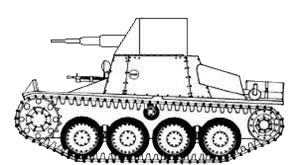
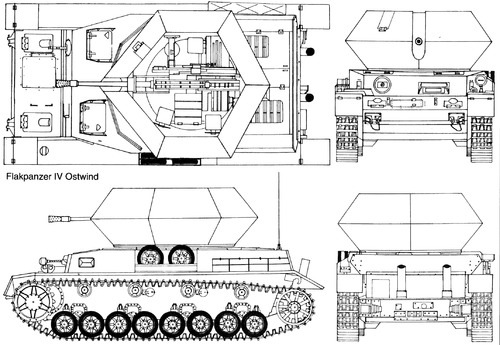
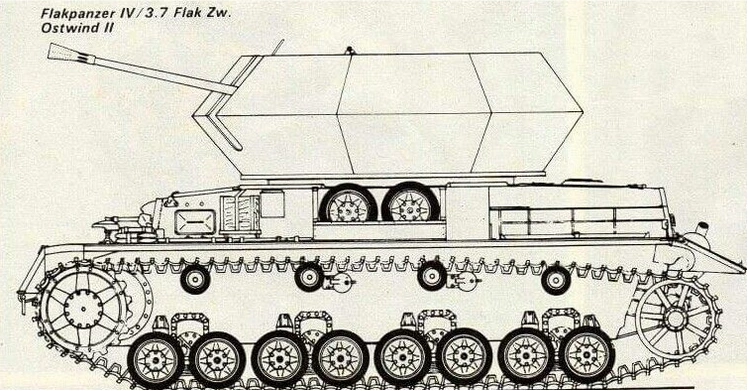
In the later stages of the Second World War, the Germans lost control over the skies and their ground forces had to endure extensive enemy air attack raids. The use of self-propelled anti-aircraft guns (SPAAG) based on half-track chassis offered some way to fight back, but these were themselves highly vulnerable, as they lacked proper armor protection. A SPAAG based on a tank chassis was more desirable. Starting from 1944, the German focus was on producing vehicles based on the Panzer IV chassis. The vehicle known as the Ostwind (Eng. Eastwind) was one of them, armed with a single 3.7 cm anti-aircraft gun placed in an open-topped turret. In the hopes of further increasing its firepower, the Germans tested the installation of two 3.7 cm guns in a modified turret which led to possibly the creation of a single Ostwind II prototype.